

Getting braces put on is easy. The appointment takes about an hour, it does not hurt, and you walk out with a new smile already underway.
The two weeks that follow are where most of the adjusting happens. Nothing about it is difficult, but it helps to know what is coming so you can plan around it instead of figuring it out mid-week.

Days One Through Three
Your teeth will feel sore. Not sharp pain, more of a dull ache that shows up a few hours after your appointment and peaks around the second day.
This is normal and it means things are working. Your teeth are being asked to move for the first time, and the surrounding tissue responds to that.
A few things help. Stick to soft foods, which we will get to in a moment. A warm saltwater rinse eases tenderness and is worth doing a couple of times a day. Over-the-counter pain relievers, used as directed on the label, handle the rest for most people.
Your lips and cheeks also need a few days to get used to the brackets. Orthodontic wax is the fix here, and we will send you home with some.
By day four or five, most patients tell us they have largely stopped noticing.
What to Eat That First Week
Anything that requires real chewing is going to be uncomfortable, so plan for softer meals. Some options that work well:
- Yogurt, smoothies, and milkshakes
- Scrambled eggs and oatmeal
- Soups and broths
- Mashed potatoes and soft-cooked rice
- Pasta
- Soft cheeses
- Flaky fish
- Steamed vegetables cooked until tender
- Bananas, applesauce, and other soft fruit
You are not stuck with this list for long. Most people are back to normal meals within a week, with a few permanent exceptions.
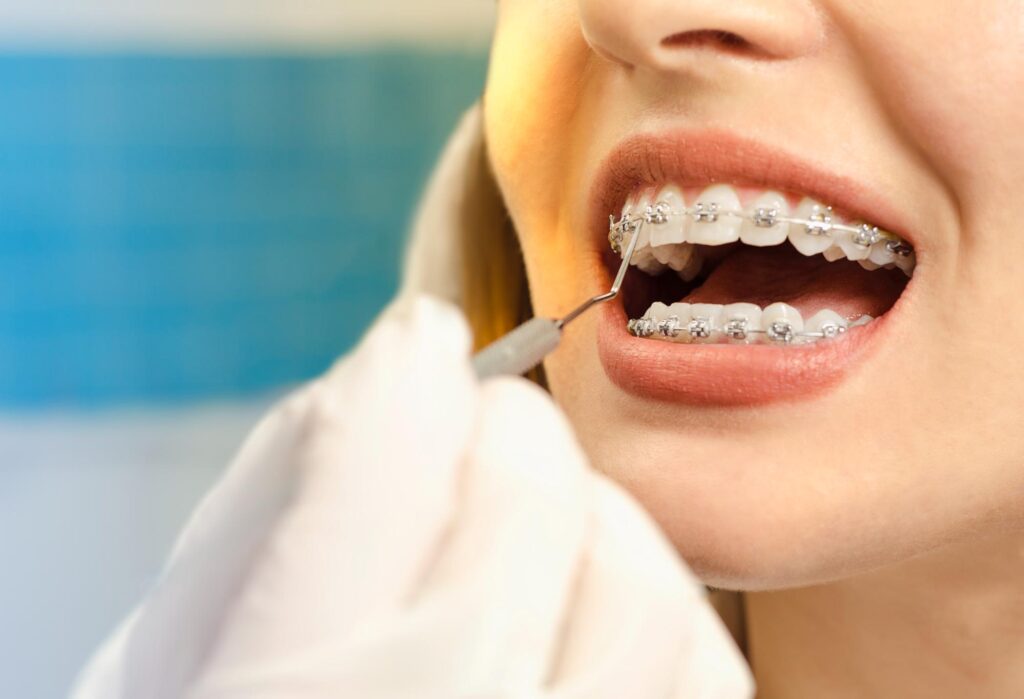
The Foods That Stay Off the Menu
These are the ones to leave behind for the duration of treatment, because they break brackets and bend wires:
- Hard candy, ice, and nuts
- Popcorn, including the unpopped kernels
- Caramel, taffy, and chewing gum
- Crusty bread and bagels
- Corn on the cob
- Whole apples and raw carrots, unless you cut them into pieces first
Almost everything on that list has a workaround. Cut the apple, slice the corn off the cob, choose the softer roll. A broken bracket means an unplanned visit and can slow your treatment down, so a small habit change is worth it.
If food restrictions are a real sticking point for you, that is one of the practical differences between braces and removable aligners, and it is worth raising if you are still deciding between braces and aligners.
Getting the Cleaning Routine Down
This is the habit that takes the longest to feel automatic, and it matters more than anything else on this page.
Brush after every meal and before bed. Food gets caught around brackets in a way it never did before, and plaque left sitting against the enamel can leave marks you will still see after the braces come off.
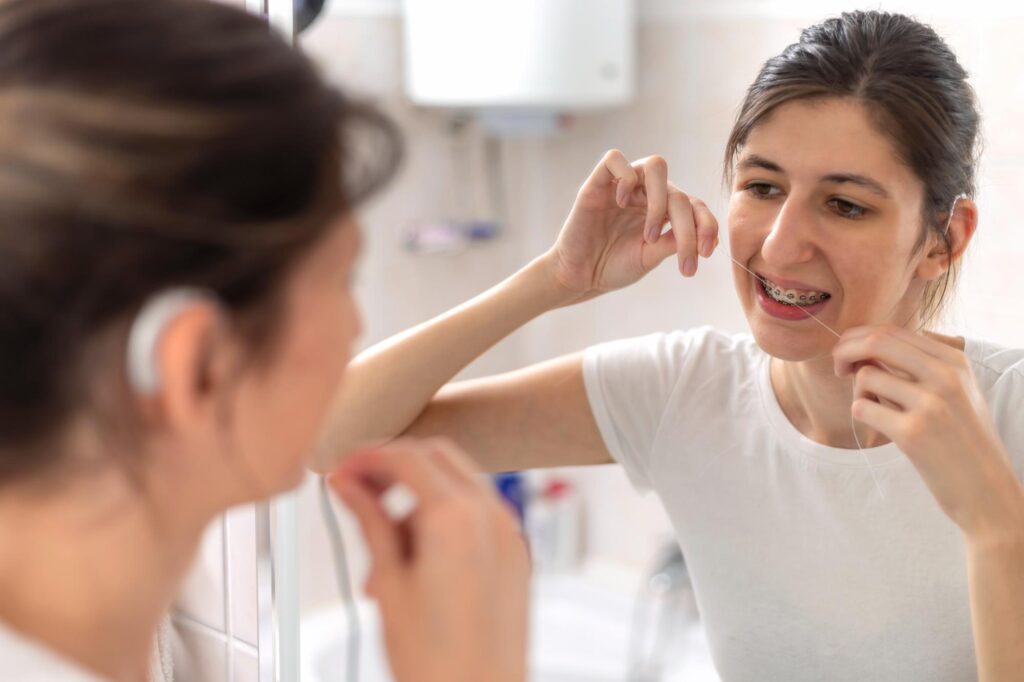
Flossing takes a threader or an interdental brush to get under the wire. It feels slow for the first week and then it does not. A water flosser is a reasonable addition if you want one, though it works alongside flossing rather than replacing it.
Keep seeing your regular dentist for cleanings and checkups throughout treatment. That does not pause because you are in braces.
Talking, Smiling, and Everything Else
Some patients notice a slight change in speech for the first day or two, especially with clear brackets. It sorts itself out quickly, and reading out loud for a few minutes speeds it along.
For teens worried about photos, the honest answer is that modern braces use much smaller brackets than the ones their parents remember, and the self-conscious phase usually passes faster than expected.
When to Call Us
Call the office if a bracket comes loose, if a wire is poking and wax is not solving it, or if you have discomfort that feels sharp rather than achy.
None of these are emergencies, but they are worth handling promptly rather than waiting for your next scheduled visit. Dr. Marcel, Dr. Faldu, and our Pleasanton team would much rather hear from you early.

Two Weeks In
By the end of the second week, the soreness is gone, the routine is a routine, and you have stopped thinking about it. From there it is just regular visits every four to eight weeks while your smile does its work.
If you have not started yet and you are weighing your options, schedule a consultation and we will walk you through what treatment would look like for you.
FAQs
How long does the soreness after getting braces last?
Most patients feel tenderness starting a few hours after placement, peaking around the second day, and easing by day four or five. Soft foods, warm saltwater rinses, and over-the-counter pain relievers used as directed on the label help during that stretch. You may feel milder soreness for a day after adjustment appointments as well.
What can I eat the first few days with braces?
Stick to soft foods that need little chewing. Yogurt, smoothies, scrambled eggs, oatmeal, soup, mashed potatoes, pasta, soft cheeses, flaky fish, tender steamed vegetables, and soft fruit are all good choices. Most patients return to normal meals within about a week.
What should I do if a bracket comes loose?
Call our office so we can get you in to have it repaired. A loose bracket is not an emergency, but leaving it can slow your treatment down. If it is causing irritation before your visit, orthodontic wax placed over the bracket will help in the meantime.
Will braces change how I talk?
Some patients notice a slight difference for the first day or two, and it typically resolves on its own as your mouth adjusts. Reading out loud for a few minutes at a time helps you adapt faster.
What is orthodontic wax and how do I use it?
Orthodontic wax is a soft, non-toxic material you press over any bracket or wire that is irritating your lip or cheek. Dry the area first, pinch off a small piece, and press it into place. It is meant as short-term relief while your mouth adjusts, so let us know if you are relying on it in the same spot repeatedly.