

Most practices describe clear aligners as suitable for “mild to moderate” cases, which is accurate but not especially useful when you are trying to figure out whether that means you.
Aligner technology has advanced considerably, and the range of cases it handles well is wider than it was ten years ago. It is still not everything. Here is a clearer picture of where aligners do their best work, where brackets remain the better tool, and why the honest answer depends on your scan rather than on anything you read online.
Cases Clear Aligners Handle Well
Crowding is one of the most common reasons people seek treatment, and aligners address it reliably when there is a reasonable amount of room to work with. The same goes for spacing, where gaps between teeth need to be closed.
Aligners also do well with relapse. If you had braces years ago, stopped wearing your retainer, and watched your teeth drift back, that kind of correction is often well within range and may take less time than your original treatment did.
Many bite issues respond to aligner treatment too. Overbites, underbites, crossbites, and open bites all sit on a spectrum, and cases toward the milder end of that spectrum are frequently treatable with trays.
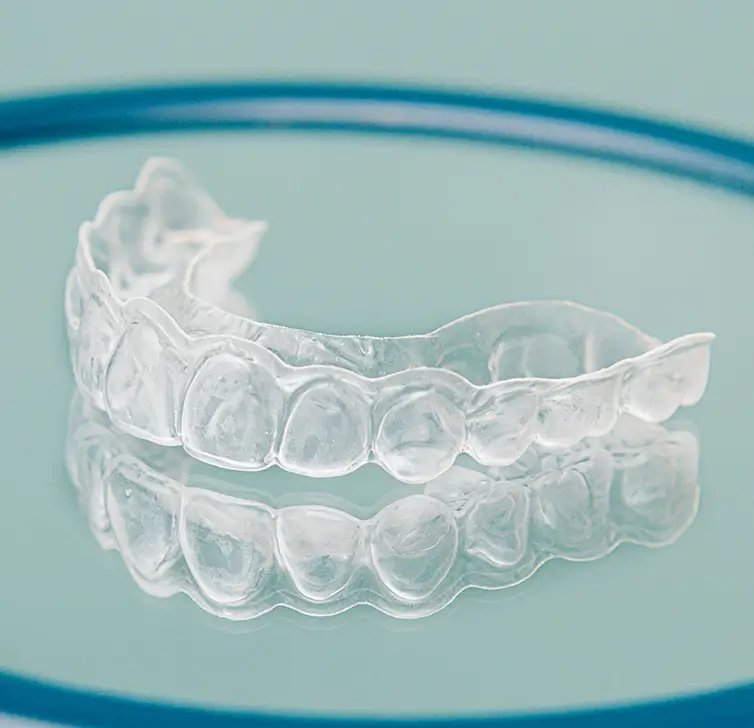
How Attachments Widen the Range
If you have researched aligners, you have probably run into the term attachments and wondered whether they undercut the whole point.
Attachments are small tooth-colored bumps bonded to specific teeth. They give the tray something to grip, which lets it perform movements the smooth surface of a tooth would not allow on its own. Rotating a round tooth like a canine, or moving a tooth vertically rather than side to side, are both far more predictable with an attachment in place.
They are placed only where the plan calls for them, and because they are matched to your tooth color, they are difficult to spot in conversation. Most patients stop noticing them within a couple of weeks.
Attachments are the reason a lot of cases that would have been braces-only a decade ago are now reasonable candidates for aligner treatment.
Where Braces Are Usually the Better Tool
There are cases where we will recommend brackets and wires, and we would rather say so at the consultation than partway through treatment.
Severe rotation is one. When a tooth is turned significantly in its socket, the direct leverage of a bracket bonded to that tooth gives us more control than a tray can.
Significant vertical movement is another. Bringing a tooth down into the arch, or pushing one further up, asks for a kind of force that brackets deliver more predictably.
Large space closure, particularly after an extraction, generally favors braces. So do cases where the underlying issue is the position of the jaws rather than the teeth. When the bite discrepancy is skeletal, treatment often involves coordination with an oral surgeon, and the plan is built around braces before and after.
If you like the idea of a lower-profile option but your case points toward brackets, ceramic brackets are worth a look. It is a common middle path, and weighing clear braces against aligners is a conversation we have often.
Candidacy Includes You, Not Just Your Teeth
One thing worth naming: whether aligners will work is partly a question about your teeth and partly a question about your habits.
Trays that spend the day in a case are not moving anything. If you already know that consistency is not your strength, that is genuinely useful information for us to have before we build a plan, not a reason to be embarrassed.
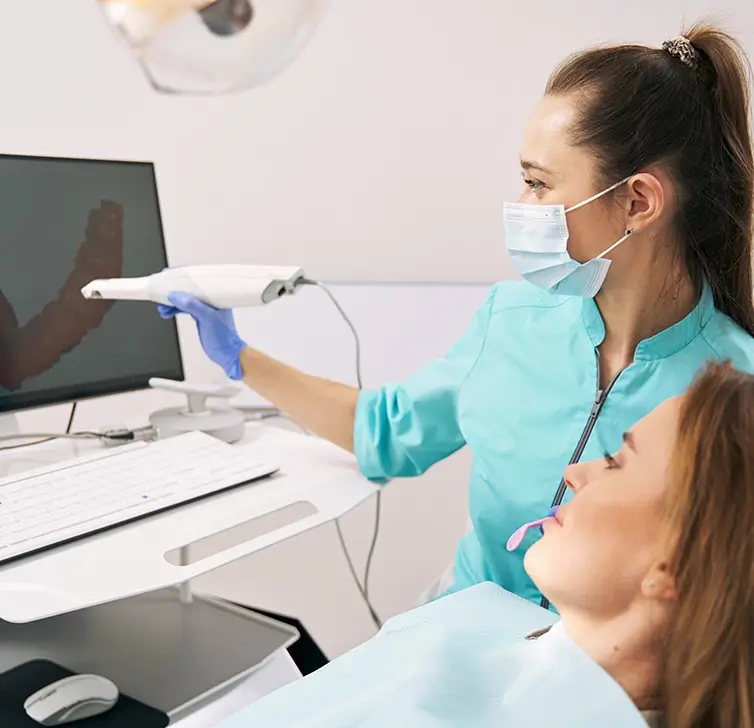
The Real Answer Comes From Your Scan
Everything above describes tendencies. Your case is specific.
At your consultation we take a digital scan and full records, and Dr. Marcel and Dr. Faldu look at what your teeth actually need to do to reach a healthy, stable result. Sometimes that points squarely at aligners, and we can then talk through which of Invisalign, Spark, and SureSmile suits your case. Sometimes it points at braces. Sometimes either would work and the decision is yours to make with good information behind it.
What you will not get from us is a plan built around the treatment you asked for when the evidence points somewhere else.
Find Out Where Your Case Falls
The only reliable way to know whether you are a candidate is to have your case evaluated. Whether you see us in Livermore, Pleasanton, or with our Tracy team, you will leave understanding what your options are and why.
FAQs
What are clear aligner attachments and will I need them?
Attachments are small tooth-colored bumps bonded to certain teeth to give the aligner something to grip, which allows movements that would be difficult otherwise. Not every case needs them, and when they are used they are placed only on the teeth that require them. Because they match your tooth color, most people find them hard to notice.
Can clear aligners fix an overbite?
Many overbite cases respond well to aligner treatment, particularly when the issue involves tooth position. When the overbite comes from the position of the jaws rather than the teeth, treatment may call for braces, and in some cases coordination with an oral surgeon. An evaluation is the only way to know which applies to you.
Can clear aligners close a gap from a missing tooth?
It depends on the size of the space and what the plan calls for. Smaller spaces can often be closed or reduced with aligners. Larger space closure, especially following an extraction, is generally more predictable with braces. If the plan involves making room for an implant instead of closing the space, that changes the approach again.
Are severe crowding cases treatable with clear aligners?
Mild and moderate crowding is frequently treatable with aligners. Severe crowding, particularly when it involves significantly rotated teeth or requires extractions, more often calls for braces. Dr. Marcel and Dr. Faldu will tell you which category your case falls into after reviewing your records.
What happens if I start with clear aligners and my case turns out to need more?
Treatment plans are built from detailed digital records before your first tray is delivered, which is designed to prevent that surprise. If your smile is not responding as expected, we adjust the plan. Progress is monitored throughout treatment, both at in-person visits and virtually, so changes are caught early rather than at the end.