

Most people who come in asking about a discreet treatment option have already narrowed it down to two ideas: braces that do not look like metal, or trays that barely look like anything at all.
Both get you to the same place. A healthy, well-aligned bite that functions properly and holds up over time. What differs is how each one fits into your daily life, and which one your specific case actually calls for.
Here is how we think about the choice.
What the Two Options Have in Common
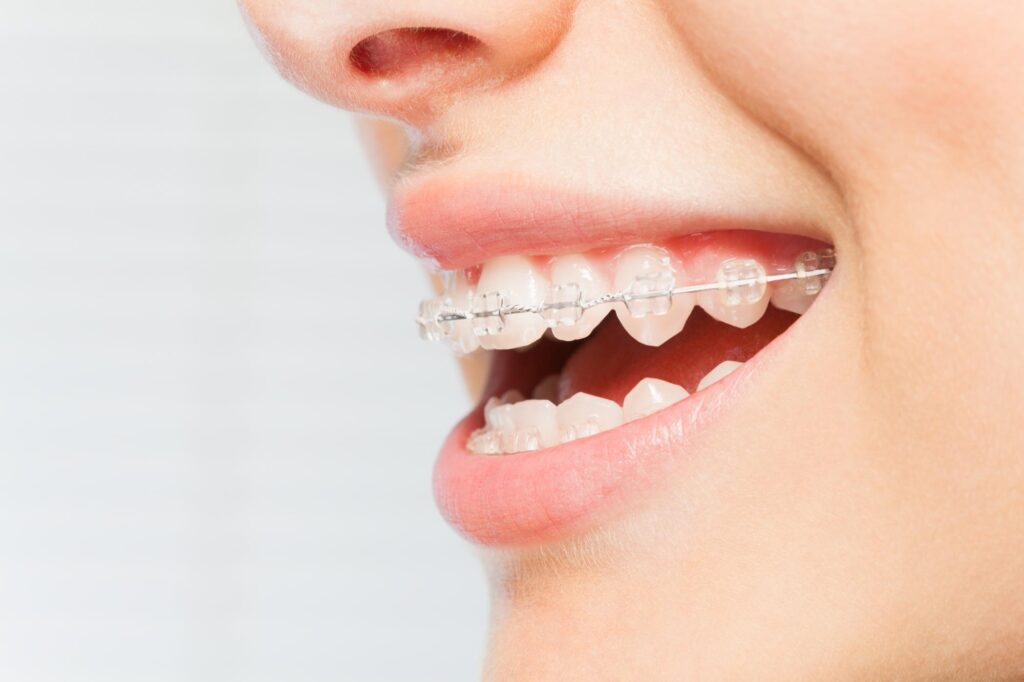
Clear braces use ceramic brackets in a clear or tooth-colored material, paired with orthodontic wires. Mechanically they work exactly the way metal braces do, applying steady pressure through brackets and wires to guide teeth into position. The difference is entirely in how they look.
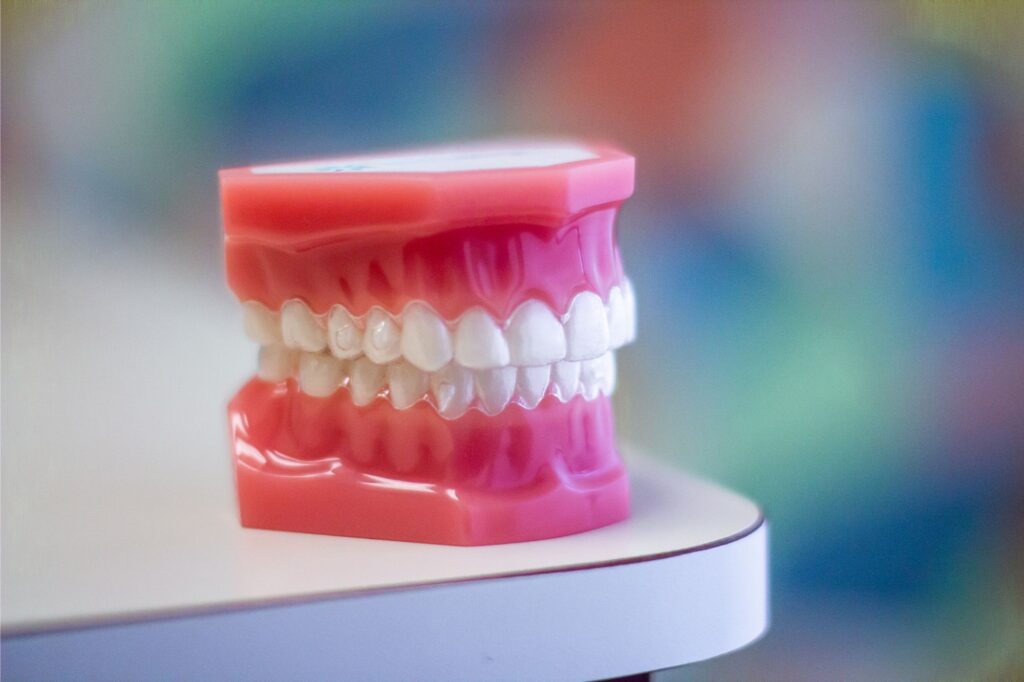
Clear aligners take a different route to the same destination. Instead of brackets, you move through a series of custom trays, each one shaped slightly differently from the last, until your teeth reach their planned positions.
Both are genuinely low-profile. Both are common choices for teens and adults who would rather their treatment not be the first thing people notice. And both can produce excellent results in the right case.
Where Clear Braces Have the Advantage
The biggest one is that they are fixed in place. They are working every hour of every day, whether you think about them or not.
That matters more than it sounds. Treatment progress with any removable appliance depends on actually wearing it, and life gets busy. Brackets remove that variable entirely.
Clear braces also give us more direct control over complex movements. Because the brackets are bonded to individual teeth and connected by a wire, Dr. Faldu and Dr. Marcel can make precise, targeted adjustments at each visit. For cases involving significant rotation, larger movements, or more involved bite correction, that control can make the treatment plan more predictable.
Where Clear Aligners Have the Advantage
You take them out. That one fact drives most of the benefits.
You eat what you want, because the trays come out at meals. There is no list of foods to avoid, no worrying about a bracket coming loose from something crunchy. Brushing and flossing stay exactly as they were before treatment started, with no threading around wires.
Aligners also tend to mean fewer unplanned visits. There is no bracket to pop off and no wire to poke, which are the two most common reasons patients call us between appointments.
For adults who present in meetings or teens who are self-conscious about photos, the visual difference is real. Ceramic brackets are subtle. Aligners are closer to invisible.
The Honest Part: Aligners Only Work When You Wear Them
Aligners need to be in your mouth roughly 20 to 22 hours a day to stay on schedule. That leaves time for meals and brushing, and not much else.
Most patients handle this without much trouble. Some do not, and that is worth being realistic about before treatment starts rather than six months in. If you already suspect you would leave them in a napkin at lunch more often than not, clear braces may simply be the better fit for you, and there is nothing wrong with saying so.
A Note on Appearance Over Time
With ceramic braces, the brackets themselves resist staining. The clear elastic ties that hold the wire can pick up color from coffee, tea, or red wine, but those are replaced at every adjustment appointment, so any discoloration is temporary rather than permanent.
Aligners can dull or cloud if they are not cleaned regularly, though you also move into a fresh set on a regular schedule, which resets the clock.
Neither option is high-maintenance. They just ask for slightly different habits.

How We Decide With You
At your first visit, we take digital records of your teeth, bite, and facial structure, then look at what your case actually requires. How far the teeth need to travel, what kind of movements are involved, how your bite fits together.
Sometimes that evaluation points clearly to one option. Sometimes both would work well, and the decision comes down to your lifestyle, your schedule, and what you would rather live with for the next year or two. When aligners are the direction, we can also talk through the three clear aligner systems we offer and which one suits your case.
Whichever way it goes, you will leave the consultation understanding the reasoning behind the recommendation, not just the recommendation itself. That is true whether you see us at our Pleasanton office, our Tracy office, or in Livermore.
See Which Option Fits Your Smile
The right choice depends on your teeth, your bite, and your day-to-day life. Schedule a free consultation and we will look at all three together.
FAQs
Are clear braces more noticeable than clear aligners?
Generally, yes, though the difference is smaller than most people expect. Ceramic brackets are made in clear or tooth-colored materials that blend with your natural teeth, so they are far less visible than metal. Clear aligners are closer to invisible since there is no hardware bonded to the teeth. Both are considered discreet options.
Which option is better for teenagers?
It depends on the teen. Clear braces work continuously without relying on anyone remembering to put them back in, which suits some households better. Clear aligners offer more freedom around food, sports, and photos, and many teens handle the wear schedule well. Dr. Marcel and Dr. Faldu will give you an honest read after evaluating your teen’s case.
Can I switch from clear braces to clear aligners partway through treatment?
Changing course mid-treatment is sometimes possible, but it is not automatic and it depends on where you are in the plan and what movements are still ahead. If you are unsure which direction to commit to, that is worth raising at your consultation rather than after treatment has started.
Do clear braces require more appointments than clear aligners?
Both involve regular check-ins so we can confirm your smile is responding as expected. With clear braces, those visits include adjustments and elastic tie changes. With aligners, DentalMonitoring allows some progress checks to happen virtually between in-person visits, which can be more convenient for busy schedules.
Does one option work better if I play sports or a wind instrument?
Clear aligners can be removed for a game or a rehearsal, which some patients prefer. If you choose braces and play contact sports, a mouthguard designed for braces protects both your appliance and your mouth. Neither option should keep you from an activity you enjoy, but tell us about it at your consultation so we can plan around it.